Playtesting: Two discoveries
Although this game project only stretched over a couple of weeks, we still managed to get some playtesting done.
Key takeaways
These things feel obvious now, but hindsight is 20/20:
-
Consistency is important! (Discovery #1)
If you have two different objects that have a similar appearance, the player will naturally think that they behave in a similar way. -
When teaching new mechanics, use things the player already knows. (Discovery #2)
It can be daunting to be presented with new mechanics, but by building them on things the player already knows, the process becomes easier. This can be true even if it means the player has to jump through more hoops to get there.
Feedback and observations
We let some of our friends test the game, and aside from telling us how the game’s difficulty was absolutely brutal and “the Dark Souls version of Mario Bros.”, we also observed some things we didn’t expect:
Discovery 1 - Players didn’t realize they were invulnerable when spawning
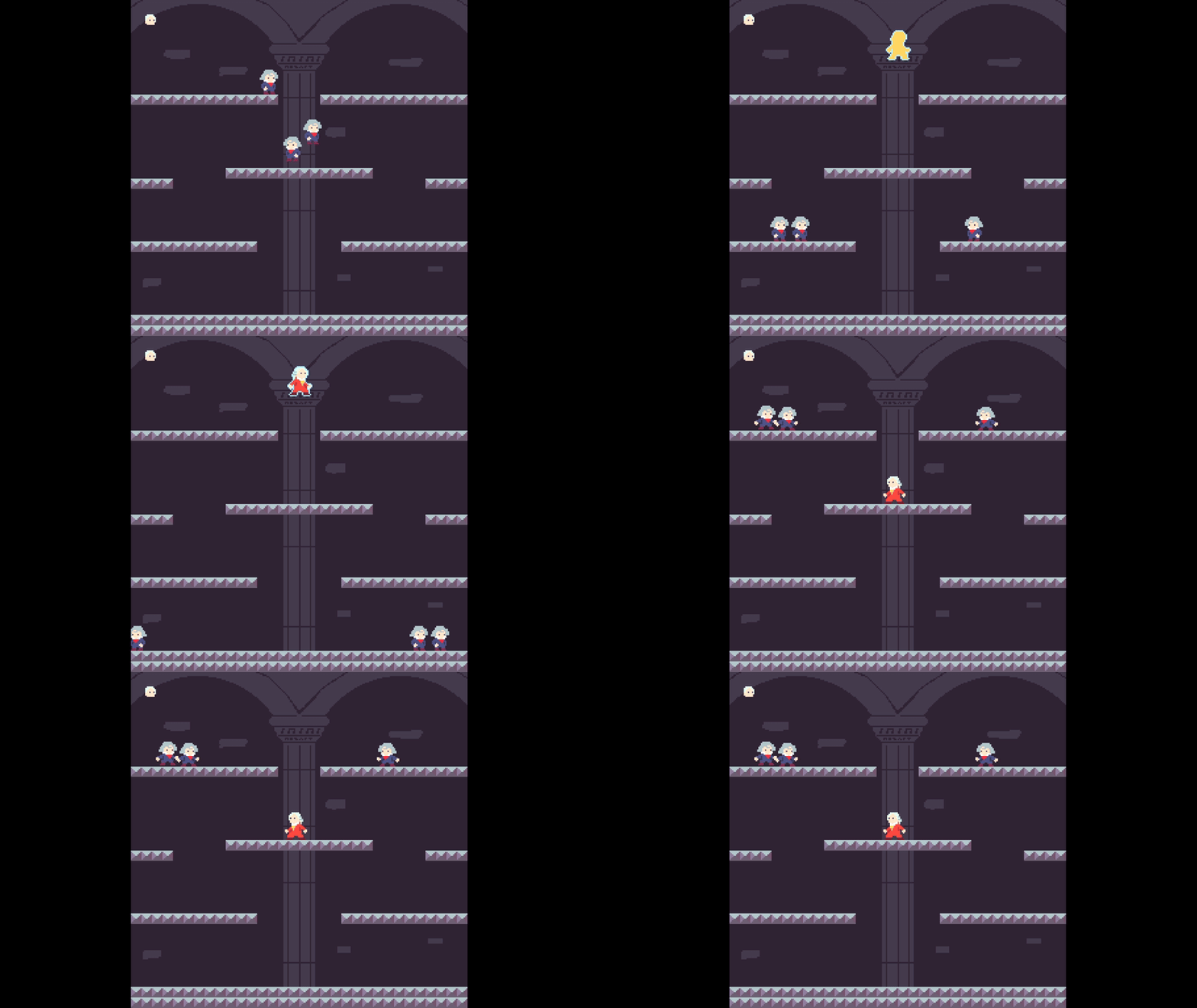
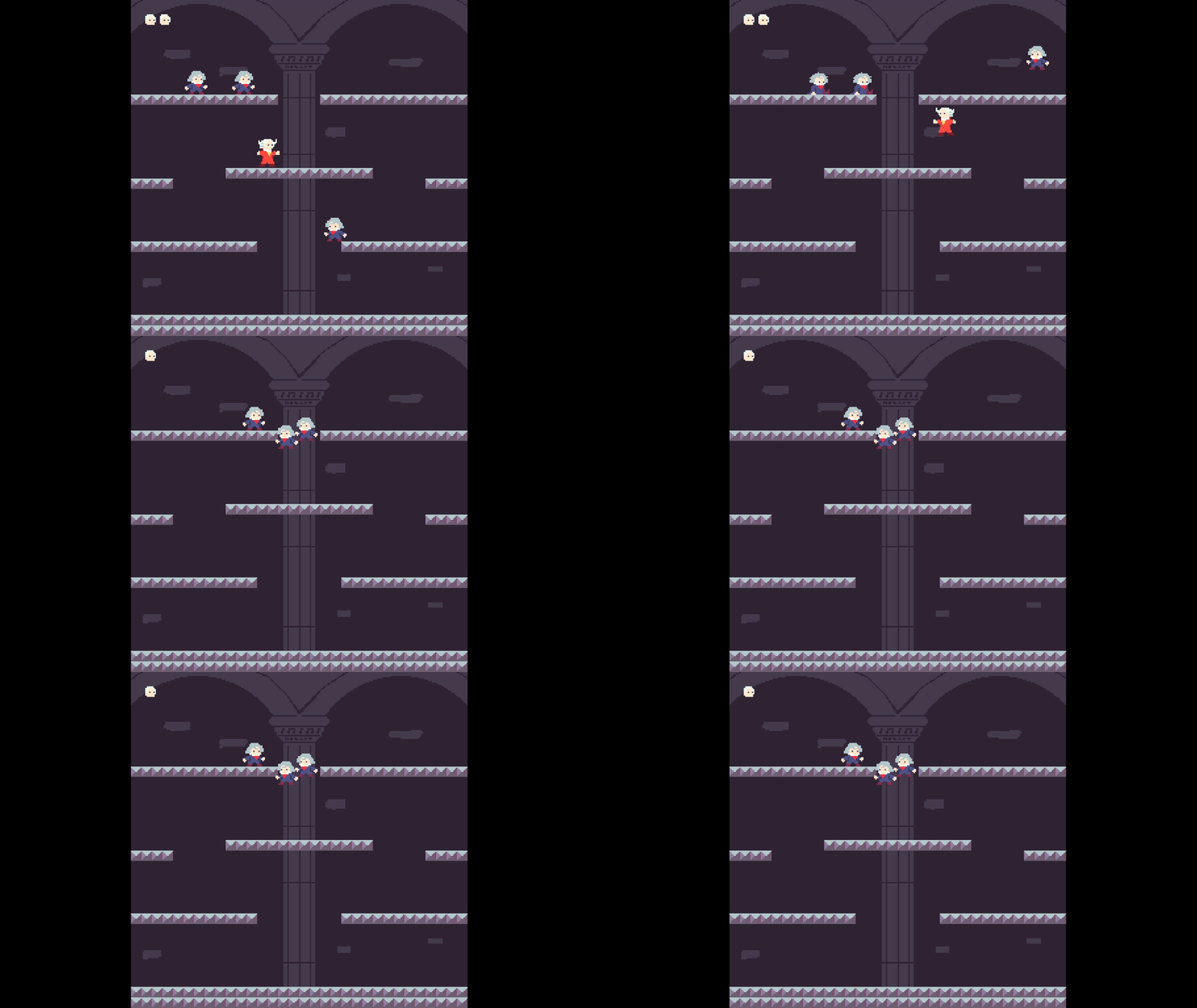
When Mozart dies, he comes gliding down from the top of the screen, pauses mid-air, and in theory stays there, invulnerable, until the player decides it’s the right moment to get back into the fight and presses a key. Great!
But no. In reality, the players were mashing all the buttons as Mozart was coming down from the ceiling. This resulted in them being instantly thrown into the fight the second their inputs were registered again, more often than not landing on top of an enemy, dying, and then complaining about how unfair the respawning was!
The problem: Players didn’t realize that they controlled when they got back into the fight after respawning.
Fix 1: Added a visual “shield”-outline and a flashing animation to the player to communicate that this is not the normal mode.
Fix 2: Increased the duration for which inputs aren’t registered, giving the player more time to recognize what is happening.
NOTE: The problem became rarer, but still persisted. We probably goofed up by adding the flashing animation to the sprite, as the enemies have a similar flashing animation when they are about to get back up. It’s easy for the player to draw the wrong conclusion that flashing = about to move when it means different things in different places. And on top of that, I think a flashing animation signals stress, not “you can rest here”.
Discovery 2 - They weren’t looking at the pianos!
In the first version of Level 2, all the pianos were activated and ready to be played. This made the game too easy, but also confusing. Moving from Level 1 to Level 2 already changed the map and added a big boss in the middle. But then also adding interactable pianos just made the whole thing overwhelming.
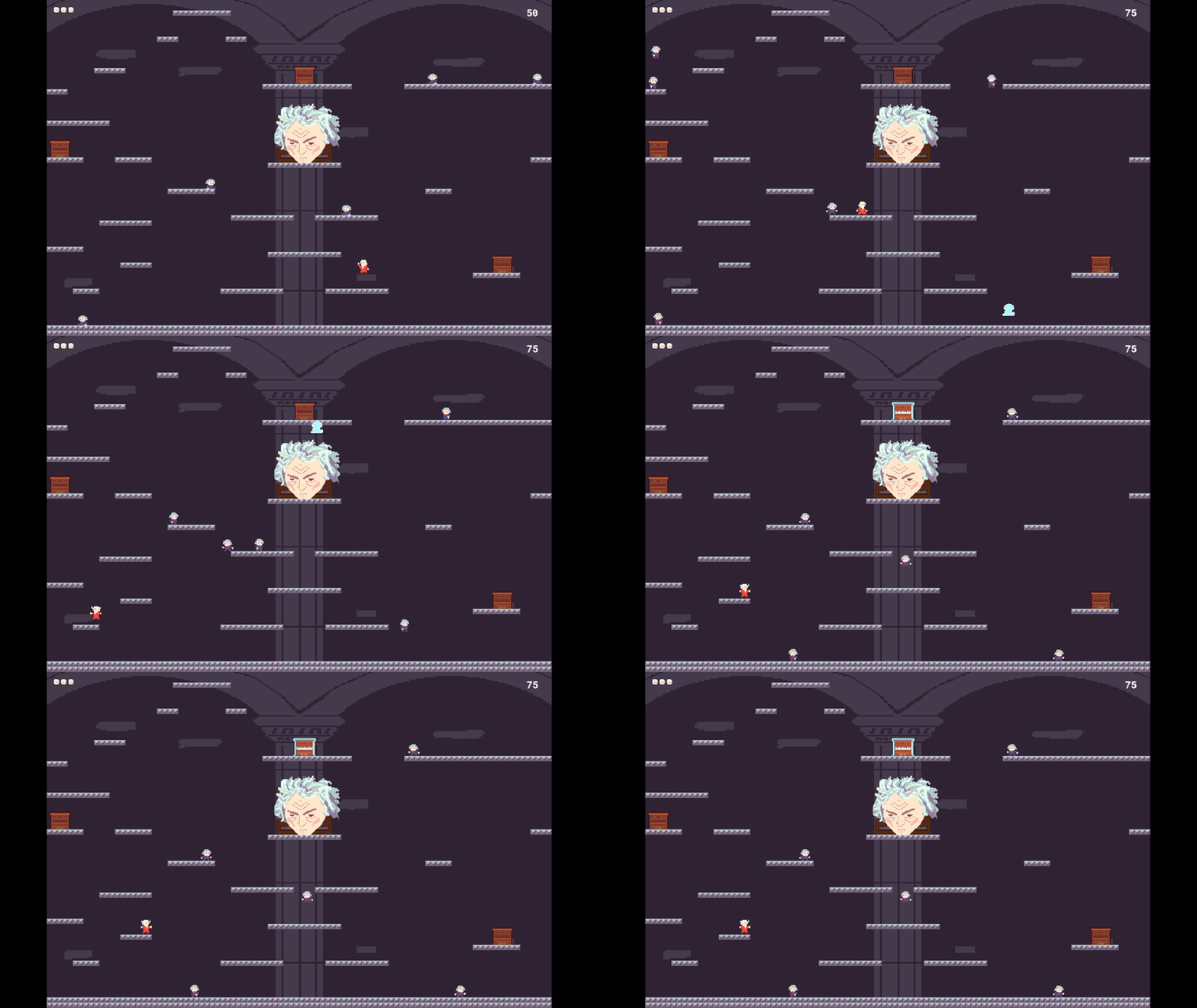
So we deactivated all the pianos by default and decided that killing an enemy (the only thing the player had done up to this point) would reward them by making a piano active, sparking curiosity and making them want to interact with the piano.
But this gave us another problem…
Since the map was so large and new players were so busy trying to survive, most people didn’t notice the pianos getting activated when they killed an enemy, leaving them unsure of what to do but to wander around aimlessly and kill more Mini Beethovens.
We solved this by giving the enemies souls that slowly fly towards the piano whenever the enemy dies. This also made it easier for the player to draw the connection between killing an enemy and unlocking a piano. Then we just assumed that this would be interesting enough that the player would want to interact with the piano. This was correct.
It still wasn’t perfect, as some of the players who found the game particularly difficult didn’t see the soul either, as they were so focused on dodging the enemies. But this was a nice addition to the game nonetheless, making it extra satisfying to kill an enemy!
Until next time — tack för att du läste.